
What Happens When a Catastrophic Injury Crosses Borders?
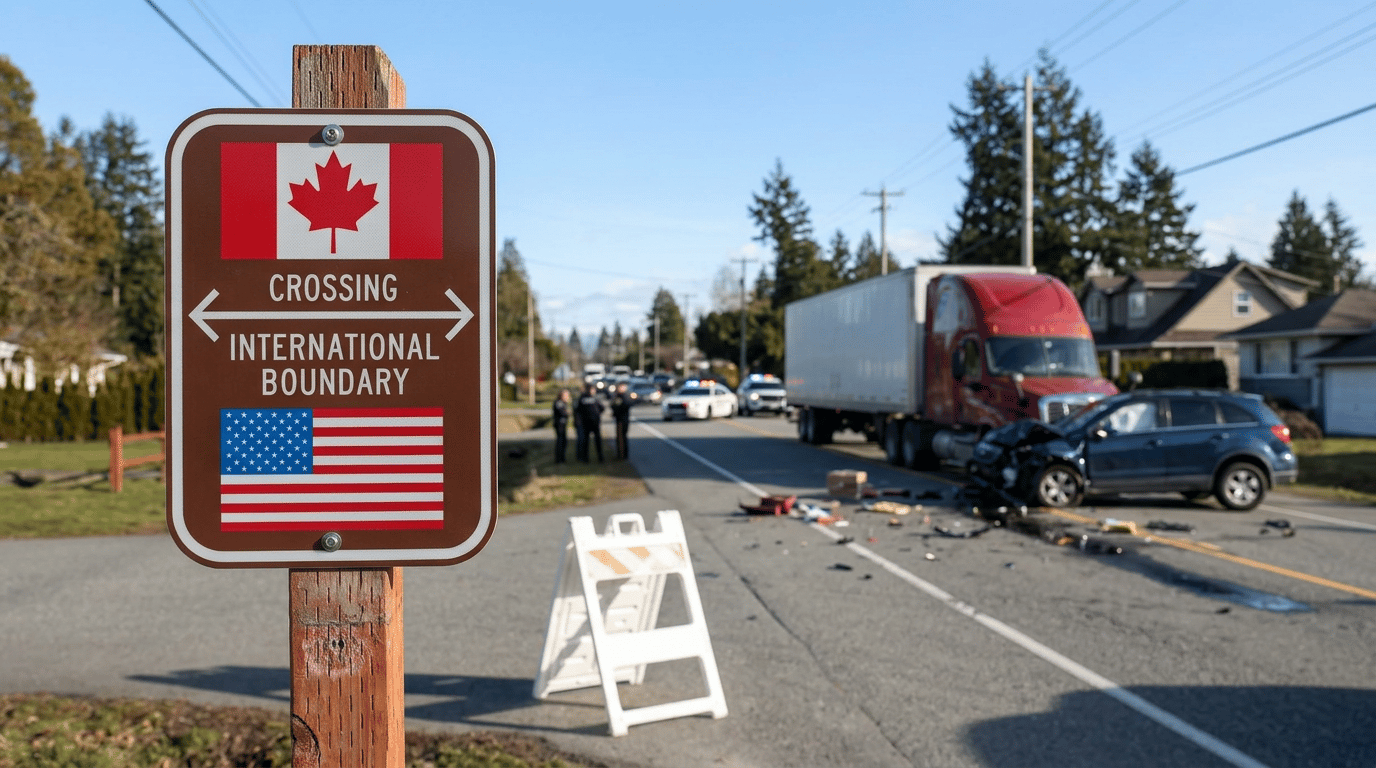
Every year, millions of people cross between the United States and Canada for work, travel, tourism, and family visits. Most make the trip without incident. But when a serious accident happens a high-speed collision on an interstate, a catastrophic slip and fall at a hotel, a trucking accident near the border the legal picture gets complicated fast.
If you or someone you love has suffered a catastrophic injury and either the victim or the at-fault party is from a different country, understanding how jurisdiction, insurance, and legal representation work across borders is critical. Getting it wrong can cost you compensation you’re legally entitled to.
When an Accident Happens Across Borders
Imagine a Pennsylvania family driving through Ontario on a vacation when a negligent truck driver causes a catastrophic collision. Or a Canadian tourist suffering a traumatic brain injury after a fall at a Philadelphia hotel. Or a cross-border commercial driver involved in a serious accident near the New York-Ontario corridor.
In each of these scenarios, several immediate legal questions arise:
Which country’s laws apply? Generally, the laws of the jurisdiction where the accident occurred govern the claim. An accident in Pennsylvania is subject to Pennsylvania tort law. An accident in Ontario is subject to Ontario law. This sounds simple, but complications arise quickly when insurance policies, employers, or defendants span both countries.
Which insurance system covers the victim? The U.S. and Canada operate under fundamentally different insurance frameworks. In Ontario, for example, a no-fault Statutory Accident Benefits Schedule (SABS) provides certain benefits to accident victims regardless of fault but accessing those benefits while also pursuing a tort claim in a U.S. court requires careful coordination to avoid conflicts.
Where do you file? Jurisdiction determines where a lawsuit can be filed, which court rules apply, what damages are available, and what the statute of limitations is. Missing a filing deadline in the wrong jurisdiction because you were focused on the other can permanently bar your claim.
The Importance of Jurisdiction-Specific Legal Representation
This is where cross-border injury cases most commonly go wrong: victims assume one attorney can handle everything on both sides of the border. In most cases, that’s not how it works.
Legal licensing is jurisdiction-specific. A Pennsylvania attorney licensed to practice in the U.S. is not licensed to practice in Ontario. A Canadian lawyer is not licensed to appear in Pennsylvania courts. For victims with claims or legal issues on both sides of the border, this means coordinating between counsel in each jurisdiction — and making sure those attorneys are actually communicating with each other.
For Pennsylvania residents who suffered catastrophic injuries and have any connection to a Canadian defendant, insurer, or incident, Pisanchyn Law Firm handles the U.S. side of serious and catastrophic injury claims. Our attorneys have decades of experience navigating complex, high-stakes personal injury cases across Pennsylvania and can work in coordination with Canadian counsel when cross-border issues arise.
For Ontario residents including those in the Greater Toronto Area and surrounding communities who need legal representation on the Canadian side of a personal injury claim, a Brampton personal injury lawyer at Pelz Law Group handles injury claims under Ontario law, including car accidents, truck accidents, slip and fall injuries, and other serious personal injury matters throughout the region.
Having the right attorney in the right jurisdiction and making sure they’re coordinated is not optional in a cross-border case. It’s the difference between a claim that succeeds and one that falls apart on a technicality.
Damages in Catastrophic Injury Cases: What’s at Stake
Whether your claim is governed by U.S. or Canadian law, the categories of compensation in a catastrophic injury case are substantial and they need to be, because the lifetime costs of a serious injury are enormous.
Medical expenses – Past and future. Surgeries, hospitalizations, rehabilitation, assistive devices, home modifications, and ongoing care. In catastrophic cases, lifetime medical costs can reach into the millions.
Lost income and earning capacity – If a catastrophic injury prevents you from returning to your prior occupation or working at all the economic loss compounds over decades. Expert economic testimony is typically required to properly calculate this.
Pain and suffering – Non-economic damages for the physical pain, emotional distress, loss of enjoyment of life, and psychological impact of living with a catastrophic injury. These damages are capped or calculated differently under U.S. and Canadian law, which is another reason jurisdiction matters enormously.
Attendant care and home support – Many catastrophically injured victims require ongoing assistance with daily living activities. Those costs, projected over a lifetime, are a significant component of any serious injury claim.
Loss of consortium – Compensation for the impact on family relationships and the loss of companionship experienced by spouses and dependents.
Catastrophic injury claims are not handled like routine personal injury cases. The stakes are too high, the evidence requirements are too demanding, and the insurance companies’ resources are too substantial for anything less than experienced, aggressive legal representation.
What to Do If You or a Family Member Has Suffered a Catastrophic Injury
Whether the accident happened in Pennsylvania, elsewhere in the U.S., or across the Canadian border, the steps immediately following a catastrophic injury matter enormously.
1. Prioritize medical care. This is obvious, but it’s also legally important. Gaps in medical treatment are used by insurance companies to minimize claims. Document everything.
2. Preserve evidence. Accident scene photos, witness contact information, dashcam footage, police reports, and surveillance video can disappear quickly. The sooner an attorney is involved, the sooner evidence can be preserved.
3. Be careful what you say to insurance companies. Both U.S. and Canadian insurers will contact you quickly after a serious accident. You are not required to give a recorded statement. Anything you say can and will be used to minimize your claim.
4. Get jurisdiction-specific legal advice immediately. Statutes of limitations the deadlines for filing a claim vary by jurisdiction and by type of claim. In Pennsylvania, the statute of limitations for personal injury is generally two years. In Ontario, it is generally two years from the date the claim was discovered. Missing these deadlines is typically fatal to a claim, with very limited exceptions.
5. Don’t assume your claim is limited to one jurisdiction. Cross-border accident victims often have legal rights in multiple jurisdictions. An attorney can help you understand the full picture before you make decisions that might waive rights you didn’t know you had.
What Makes an Injury “Catastrophic”?
Before diving into cross-border complexity, it’s worth defining the term. A catastrophic injury is one that permanently changes a person’s ability to function injuries so severe that full recovery is unlikely and the long-term impact on the victim’s life, work capacity, and independence is profound.
Common catastrophic injuries include:
- Traumatic brain injuries (TBI) – ranging from severe concussions to permanent cognitive impairment
- Spinal cord injuries – including partial or complete paralysis
- Amputations – loss of limbs resulting from trauma or required as a medical intervention after an accident
- Severe burn injuries – affecting large body surface areas and often requiring multiple surgeries
- Internal organ damage – life-threatening injuries to the heart, lungs, liver, or kidneys
- Vision or hearing loss – permanent sensory impairment resulting from trauma
These injuries don’t just change the victim’s life in the short term. They reshape everything career, relationships, independence, and financial security often permanently. The legal claims that follow must account for that full lifetime of impact, not just immediate medical bills.